From The Fountain Inn motor hotel to The All Inn, a restored landmark on East Colfax.
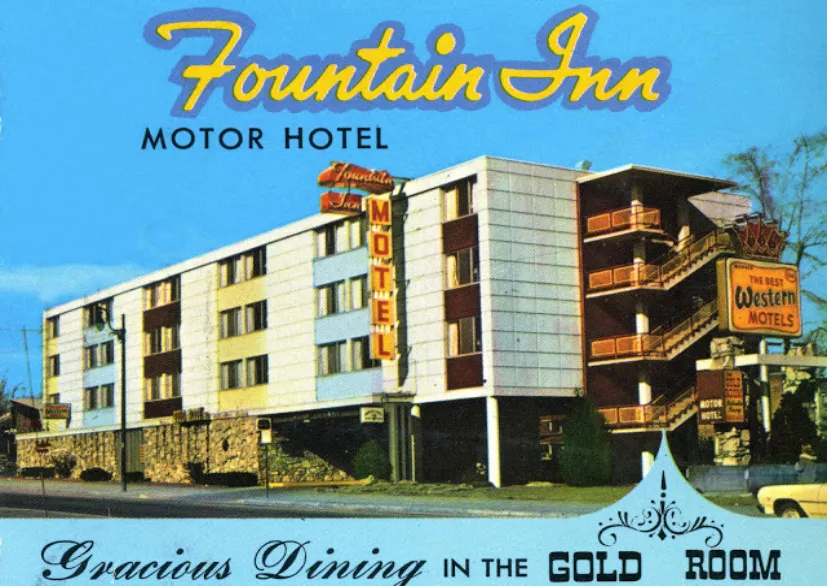
The property at 3015 Colfax Ave opened in 1959 as The Fountain Inn – a luxury motor hotel built at the height of American road travel, with the clean lines and considered proportions of midcentury design. It was the kind of place that defined a street.
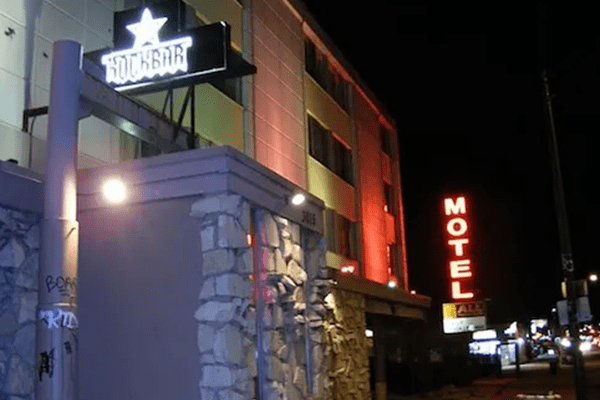
Over the decades, the building changed hands and names. By the mid-2000s, it was Rockbar, a Denver institution famous for its parties, its original rock walls, and a following so loyal it made this address one of the most recognized on the street. When Rockbar closed in 2012, the building went quiet. It sat empty for over a decade.
In 2016, visionary developer Brian Toerber bought the property. His original plan was to transform the building into apartments, encouraging a younger generation to move back to the neighborhood. In partnership with the city, a bigger idea was born – could the property be a hotel, a place to gather, and breathe new life into the neighborhood? Brian hadn’t planned on being in the hotel business. He went all in anyways.
Owner, Brian Toerber, teamed up with Abigail Plantier (Maximalist Experiential Design), Steven Waters (Take Care Brands Hospitality), and Michael Dire (Design Practices), who approached the project with a clear directive: preserve the property’s character and build a place where new memories could be made.
Rather than demolish the historic 1959 motor hotel, the project focused on adaptive reuse – restoring the existing structure while upgrading building systems to improve efficiency and reduce environmental impact. Energy-efficient heat pumps, low-flow plumbing fixtures, high-performance windows, LED lighting, and improved insulation were incorporated throughout the renovation, helping the hotel operate more sustainably while maintaining the character of the original building. This approach reflects a belief that historic preservation and environmental responsibility go hand in hand.
The original rock walls – covered in decades of graffiti – were cleaned by hand. The structural columns that had stood since 1959 were kept standing. The building’s historic tradition of color-themed floors was carried forward, reinterpreted through updated furnishings and considered materials.
In 2020, the property was listed on the National Register of Historic Places for its role in shaping Colfax Ave into a cultural and entertainment district.
The name predates the renovation. All Inn was already on the building when Toerber bought it – and it became the philosophy behind everything that followed. Going all in on a historic property that most developers would have converted or torn down. Investing in a neighborhood the city had watched struggle for years. Building a hotel that treats the community it sits in as the point, not the backdrop.
The Fountain Inn opens at 3015 E Colfax Ave. A luxury motor hotel in the midcentury modern style, built at the height of American road travel. Color-coded floors became a signature of the building.
Rockbar opens. One of Denver’s most beloved institutions – famous for its original rock walls, late nights, and a following as loyal as the neighborhood itself. In 2012, Rockbar closes and the building sits empty for over a decade.
Local Denver developer Brian Toerber purchases the property. The journey begins.
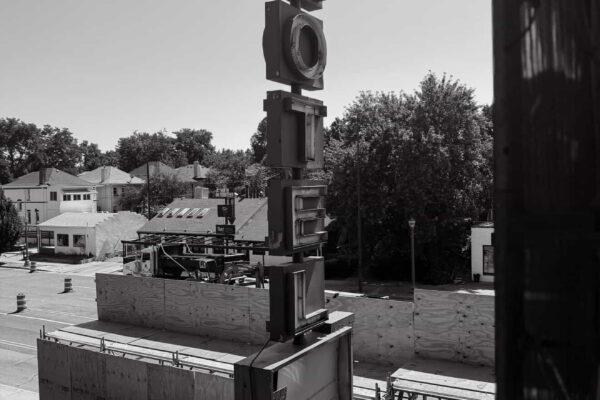
The building is listed on the National Register of Historic Places, recognized for its role in shaping Colfax Ave’s cultural identity and its significant midcentury modern architecture.
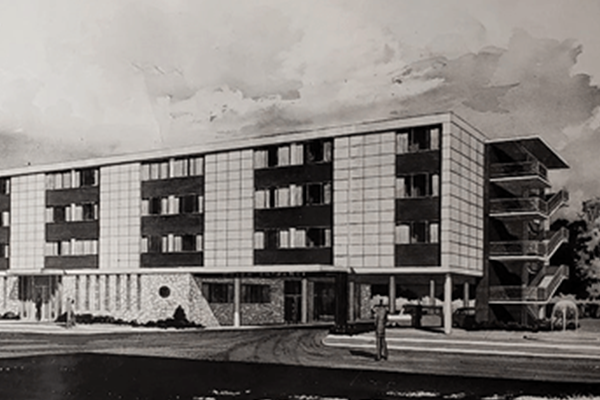
The All Inn Hotel opens. 54 rooms, an all-day cafe, outdoor seating, a coastal Mediterranean restaurant, and a wine garden. The building begins a new chapter.
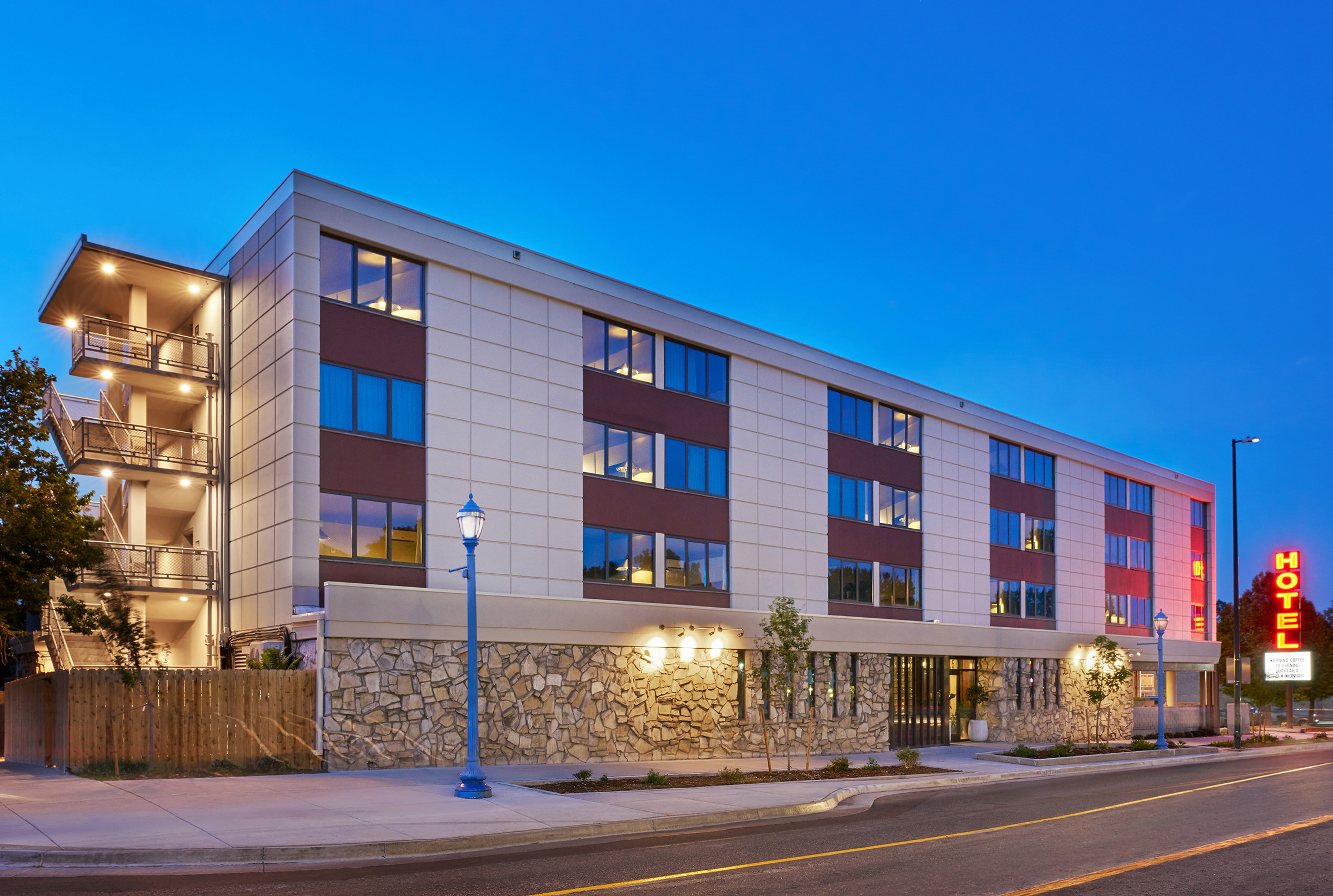
The All Inn Hotel isn’t a retreat from Colfax Ave. It’s part of it – a place to arrive, settle in, and find that the most interesting corner of Denver has been here all along.